
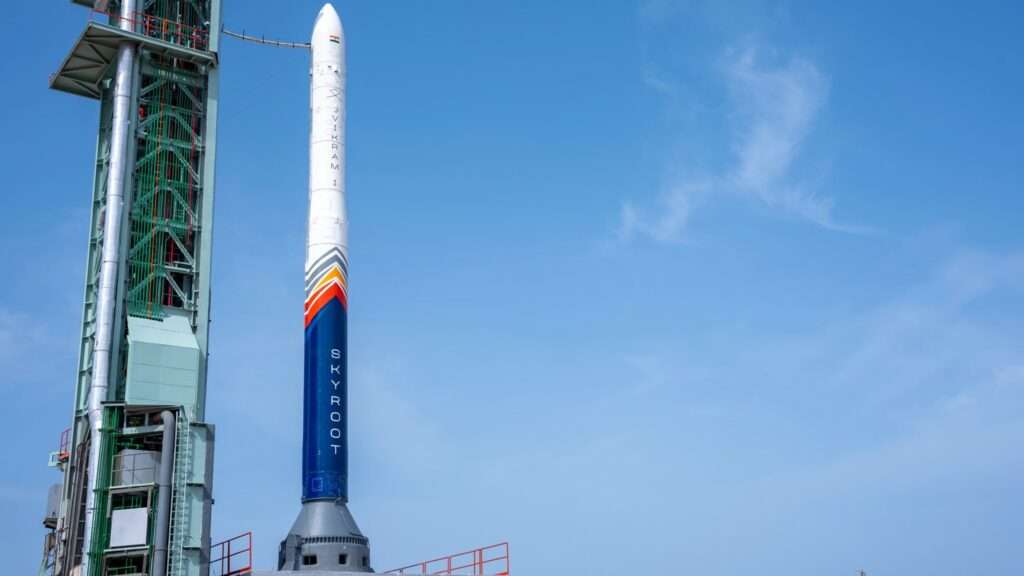
When we think of space exploration, organizations like NASA, SpaceX, or ISRO often come to mind. But today, a new name has firmly established itself in the global space industry—Skyroot Aerospace.
On July 18, 2026, Skyroot Aerospace successfully launched Vikram-1 from the Satish Dhawan Space Centre, Sriharikota, marking a historic milestone for India. More than just another rocket launch, this mission represents the beginning of a new era where private Indian companies are playing a leading role in space exploration.
A Historic Day for India
India has achieved remarkable milestones in space over the past few decades—from the Mars Orbiter Mission to Chandrayaan and Aditya-L1. Until recently, however, these missions were led primarily by ISRO.
The successful launch of Vikram-1 changes that narrative.
It demonstrates that Indian private companies are now capable of designing, building, and launching sophisticated orbital rockets, opening the doors to innovation, competition, and commercial opportunities in the global space industry.
What Is Skyroot Aerospace?
Founded in 2018 by former ISRO scientists, Skyroot Aerospace was created with a bold vision: making space more accessible and affordable.
Over the years, the Hyderabad-based startup has emerged as one of India’s most promising space-tech companies, becoming the country’s first space-tech unicorn. The company focuses on developing reliable and cost-effective launch vehicles for small satellites, an area witnessing rapid global demand.
Skyroot first gained attention with the successful Vikram-S suborbital mission. Vikram-1 now takes that success a significant step further by demonstrating the company’s ability to launch payloads into orbit.
What Is Vikram-1?
Vikram-1 is Skyroot Aerospace’s first orbital launch vehicle and represents years of engineering, testing, and innovation.
The rocket has been designed to carry small satellites into Low Earth Orbit (LEO), making it suitable for commercial satellite launches, scientific missions, and technology demonstrations.
Some of its notable features include:
- Three-stage launch vehicle
- Designed for small satellite deployment
- Built using advanced lightweight materials
- Incorporates cutting-edge propulsion technologies
- Developed to reduce launch costs while maintaining reliability
Its successful launch proves that India’s private space sector has matured significantly and is ready to compete internationally.
Why This Launch Matters
At first glance, a rocket launch may seem like a scientific achievement reserved for engineers and researchers. In reality, its impact extends far beyond the launch pad.
1. A New Chapter for India’s Private Space Industry
Following the government’s decision to open the space sector to private companies, startups have received greater opportunities to innovate. Vikram-1 is one of the strongest examples of what those policy changes can achieve.
2. Strengthening India’s Position Globally
The commercial satellite launch market is growing rapidly. Companies and governments around the world require affordable launch services for communication, Earth observation, navigation, and research satellites.
A successful private launch strengthens India’s position as a competitive player in this expanding market.
3. Encouraging Innovation
Achievements like Vikram-1 inspire engineers, entrepreneurs, researchers, and students to pursue careers in science and technology. They also encourage investment in deep-tech startups that can solve complex engineering challenges.
4. Economic Growth
A thriving private space ecosystem creates high-skilled jobs, attracts international investment, and contributes to India’s growing technology economy.
The Bigger Picture
The significance of Vikram-1 isn’t limited to one successful launch.
It signals a future where multiple Indian companies collaborate with ISRO, universities, international organizations, and private businesses to develop innovative space solutions.
As satellite internet, Earth observation, climate monitoring, precision agriculture, and space-based communications continue to expand, launch providers like Skyroot Aerospace will play an increasingly important role.
Challenges Ahead
While today’s achievement deserves celebration, the journey is only beginning.
Skyroot Aerospace will need to maintain consistent launch success, build customer confidence, improve launch frequency, and compete with established global players in the commercial space industry.
Sustained reliability will be the key to long-term success.
A Proud Moment for Every Indian
Every major technological breakthrough begins with someone believing that it is possible.
The successful launch of Vikram-1 is more than a victory for one startup—it is a testament to India’s growing capabilities in science, engineering, and innovation.
From government-led missions to private enterprises pushing new boundaries, India’s space journey is entering an exciting new phase.
If today’s launch is any indication, the future of Indian space exploration looks brighter than ever.
Final Thoughts
Vikram-1 mission is not just another headline—it is a symbol of ambition, perseverance, and technological excellence.
As India continues to embrace private innovation in space, this launch could become one of the defining moments that future generations look back on as the beginning of a new chapter in the country’s space story.
The sky is no longer the limit. For India, it is just the beginning.
Sources: Skyroot Aerospace, Indian Space Research Organisation (ISRO), IN-SPACe, and Reuters’ coverage of the Vikram-1 launch
Read More – Writing Monk Blogs